The Complete Guide to Opening a Conveyor Belt Sushi Restaurant | Sushi Train ROI | Taiwan Sushi Bar Conveyor Belt Manufacturer | Hong Chiang

The Complete Guide to Opening a Conveyor Belt Sushi Restaurant | Sushi Train ROI | We focus on Automatic System for restaurants, including Food Delivery Robot, Bullet Train system, Conveyor Belt System, Revolving Shshi Belt System, Tablet Ordering System, Mobile Ordering System, Display Conveyor, Sushi Machine, Customized Food Delivery System, and Tableware, Welcome to contact us.

The Complete Guide to Opening a Conveyor Belt Sushi Restaurant | Sushi Train ROI

The Complete Guide to Opening a Conveyor Belt Sushi Restaurant | Sushi Train ROI

Mastering Automation, Global Compliance, and Financial Strategy for Modern Kaiten Sushi Success

Looking to open a successful conveyor belt sushi restaurant? This comprehensive guide dives deep into the essentials of modern Kaiten Sushi operations—from choosing between Express (Shinkansen) delivery and hybrid models to calculating startup costs and ROI. We explore critical food safety compliance (CE/UL) for US and European markets and explain how automation systems like sushi robots and freshness monitoring can mitigate labor shortages. Gain the strategic insights you need to transform a traditional eatery into a high-profit, tech-driven dining destination.


Opening a conveyor belt sushi restaurant—also known as kaiten sushi—is no longer just about serving sushi efficiently. In today’s global market, success depends on automation strategy, food safety compliance, labor optimization, and experiential dining design.

1. Building a High-Profit Restaurant: Is the Rotary Sushi Model Right for You?

Before choosing layouts, consider if the sushi train model fits your goals. It performs best when:

  • Located in prime areas or high-traffic zones.

    In premium, high-rent areas, high overhead is a major challenge. However, the rotary sushi model turns this pressure into a profit engine.

    First, the "instant dining" experience drastically shortens meal times. Guests eat and leave quickly, allowing a high turnover rate that generates enough revenue to easily offset expensive rents. Combined with a compact counter layout, every square inch of your floor plan is maximized to seat more customers than a traditional restaurant.
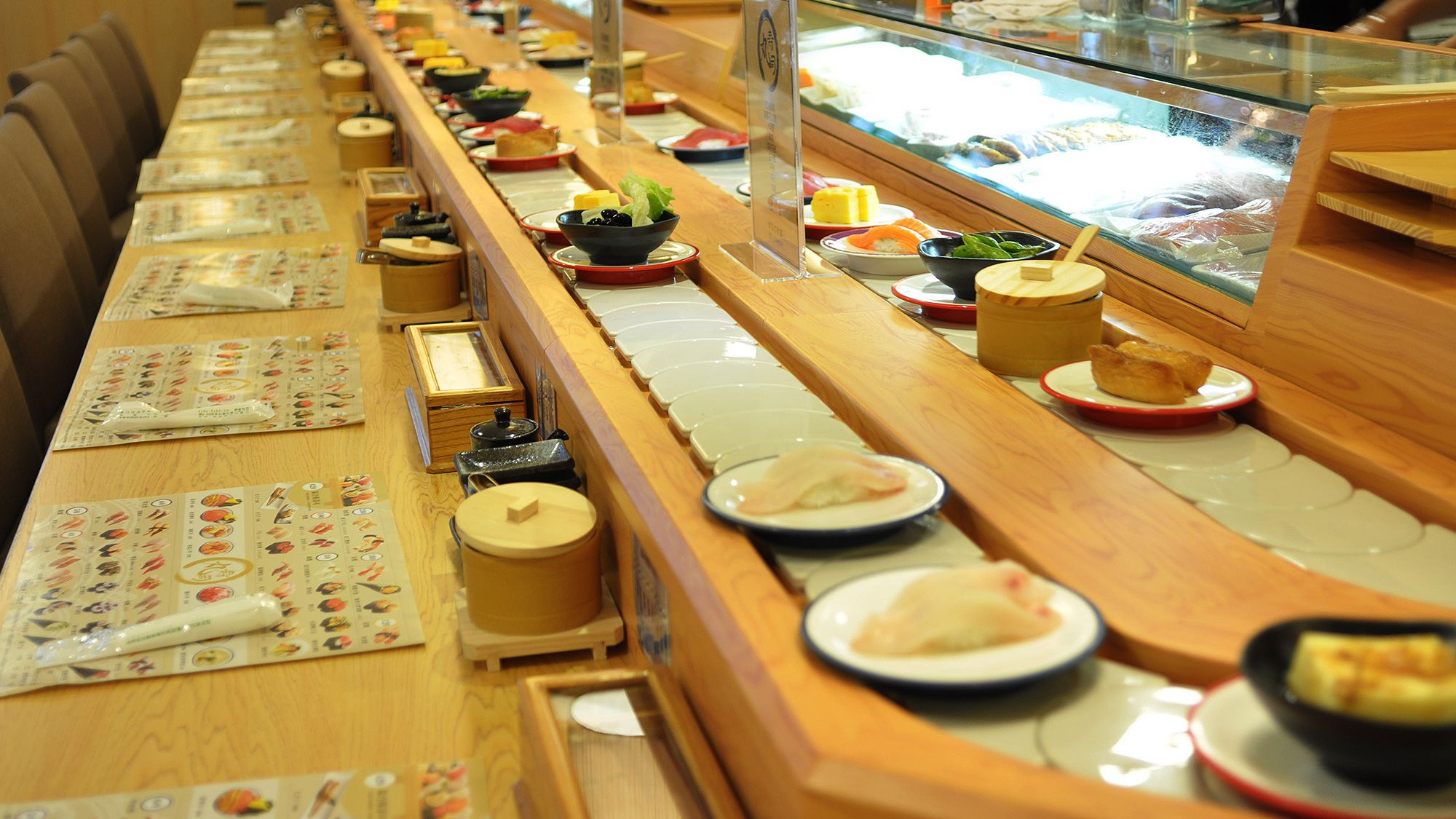
    ▲ Instant dining, faster turnover, lower rent-to-revenue ratio.

    Furthermore, the continuous parade of colorful sushi acts as a powerful visual magnet, effectively enticing high-traffic passersby into making impulsive dining decisions. On the operational side, automation and self-service minimize the need for a large front-of-house staff, cutting down heavy labor costs. Finally, a steady stream of customers ensures fast food turnover, and with big data monitoring your waste, you can keep inventory lean. This transforms high rent costs into significant economies of scale.

  • Facing hiring shortages or skyrocketing labor costs.

    In an era of hiring crises and skyrocketing wages, the automated conveyor sushi model offers the perfect solution for restaurant resilience.
    This model transforms traditional service into a "semi-self-service" powerhouse. By using conveyor belts or Shinkansen sushi trains to bring dishes directly to guests, you eliminate the need for runners. With self-service water faucets and tablets at every table, the frequency of manual service drops significantly, allowing a leaner staff to manage more tables with ease.
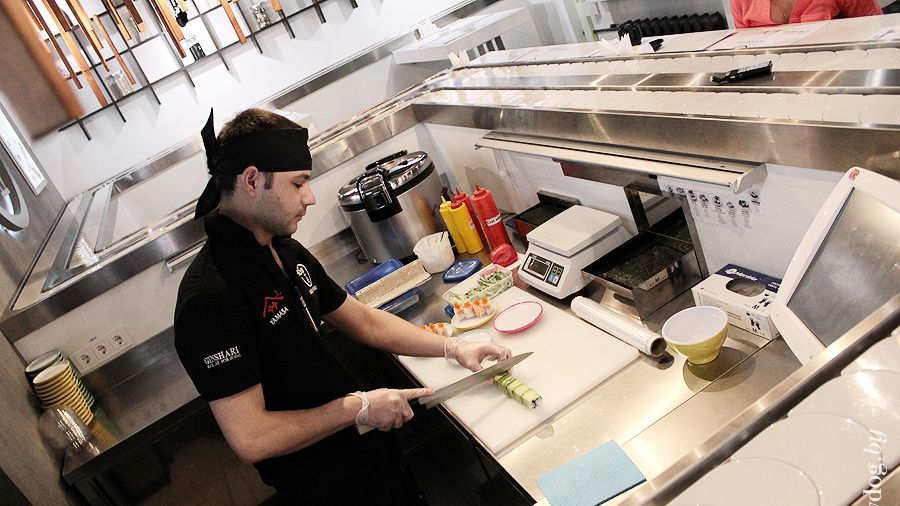
    ▲ Automation replaces manual delivery, significantly reducing labor costs and operational overhead.

    In the kitchen, sushi robots and standardized prep methods mean "skill-free operations". You no longer need to rely on high-priced master chefs; even inexperienced staff can master the art of sushi in no time. Furthermore, integrated digital ordering and AI demand forecasting ensure your team works on what’s needed, reducing both labor strain and food waste. By shifting the focus from manual labor to tech-assisted efficiency, you can maintain high output with a smaller team. The savings can then be reinvested into competitive wages for your top talent, making this the ideal strategy for thriving in today’s labor market.

  • Making dining "fun and shareable" through tech interactions to drive customer spending.

    For owners looking to make their restaurant "fun and Instagrammable," rotary sushi transforms a simple meal into an exciting adventure for the senses.
    We’ve turned cleaning up into a game with our "Gachapon Game" (Plate-to-Toy System). By inserting used plates to trigger a lucky draw, guests feel a sense of achievement and are often tempted to order just a few more plates to play again. It turns the bill-paying moment into a delightful surprise. Meanwhile, the "Shinkansen sushi train" is the star of the show. Watching dishes zoom directly to the table like a mini bullet train creates a "theatrical" delivery experience that guests love to film and share on social media.
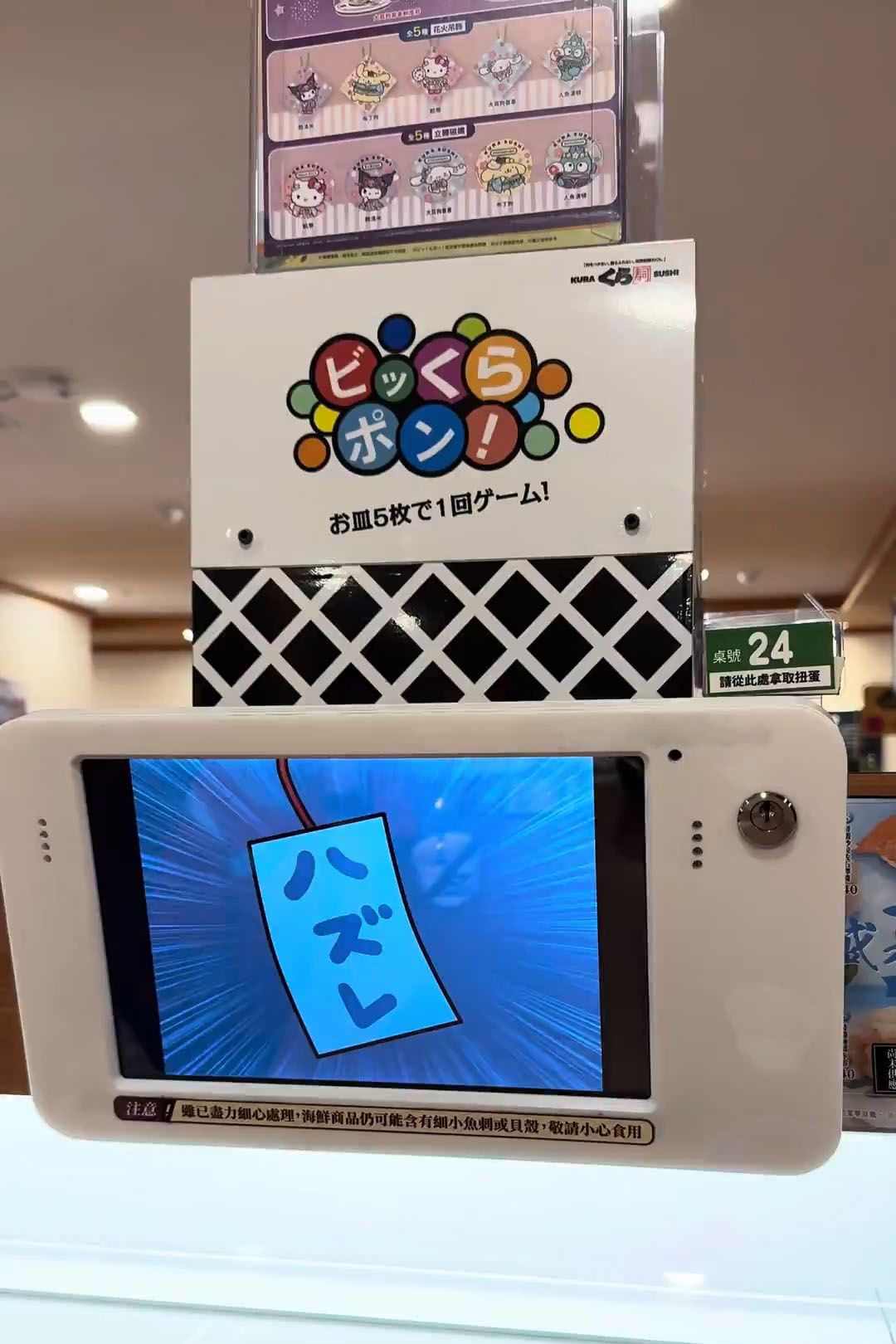
    ▲ Conveyor belt sushi embraces "Eatertainment," integrating gashapon games to fulfill customer desires for fun and interactive dining.

    Combined with tablet ordering, guests can browse and choose at their own pace, making them the directors of their own dining experience. This blend of visual appeal and social shareability ensures your restaurant is more than just a place to eat—it’s a trendy hub of entertainment, tech-aesthetics, and social connection that keeps customers coming back for more.

2. Understanding Modern Sushi Train Business Models

Traditional Kaiten Sushi

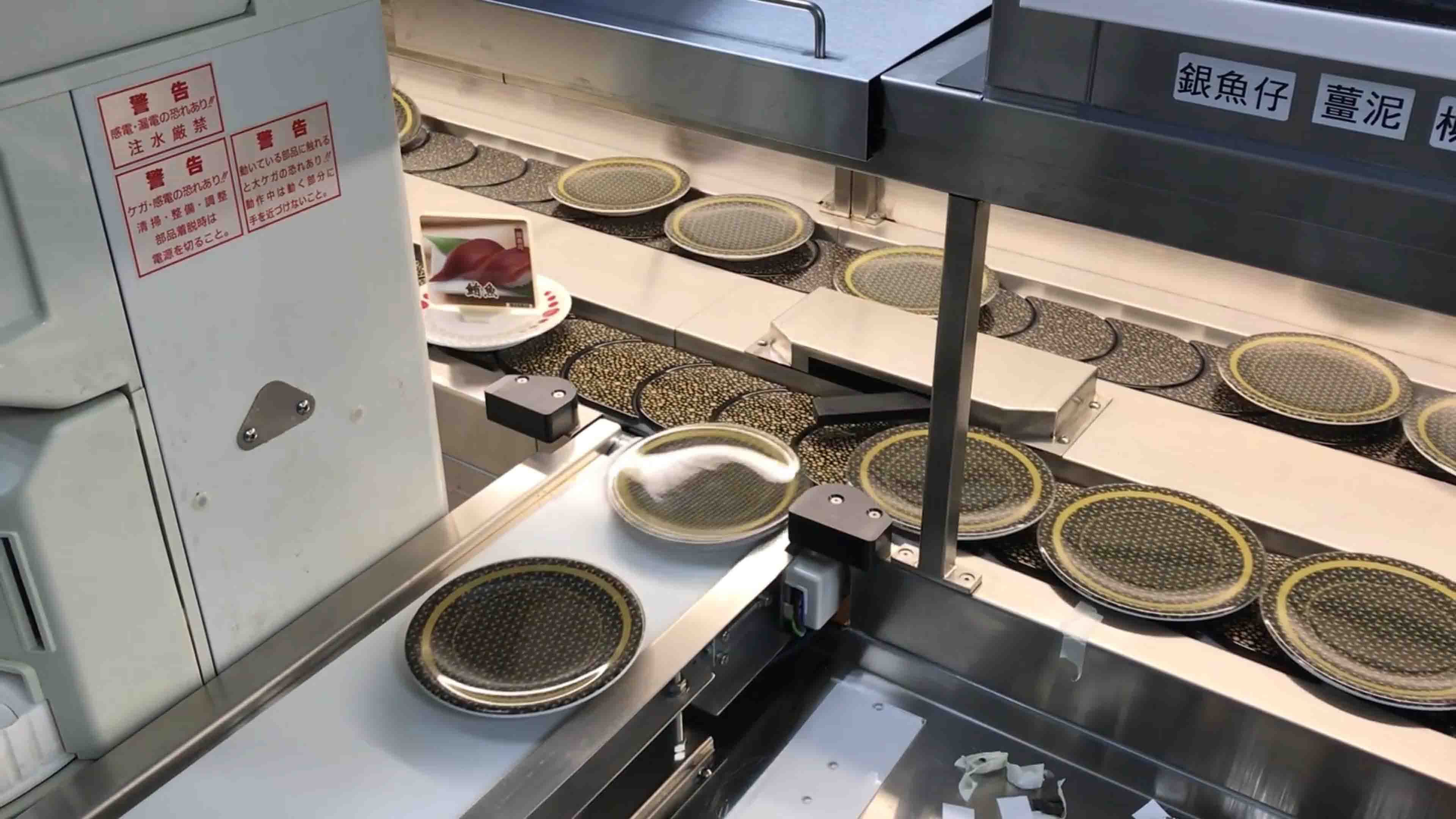
The true magic of rotary sushi lies in the dynamic "feast for the eyes" it creates within the restaurant. First, the constantly moving sushi conveyor belt taps into the human instinct to track moving objects. A colorful parade of sushi plates acts as a continuous visual stimulant, effectively triggering appetite and distracting guests from any wait-time anxiety.
Secondly, this model offers the most intuitive product display possible. Guests don't have to guess what’s on the menu; they see the real deal—the glistening freshness, the marbling of the fish, and the generous portions—right in front of them. Seeing is craving, and physical presence is far more persuasive than text on a page. This direct visual appeal naturally encourages guests to order more, effectively driving higher sales for the restaurant.
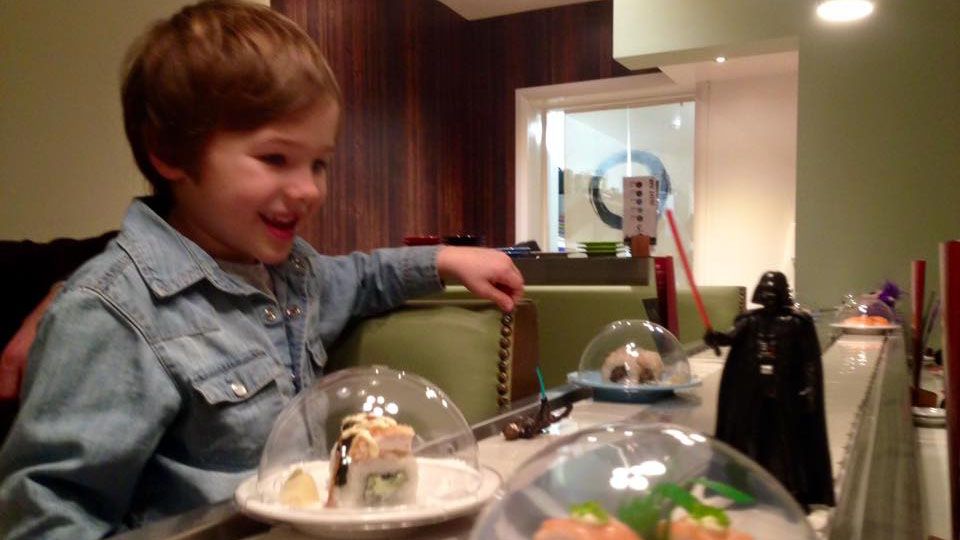
▲ Dynamic Display: Capturing visual attention to trigger appetite and eliminate dining anxiety.

Despite its appeal, conveyor belt sushi also faces a significant challenge in terms of food waste, primarily for the following reasons:

  • The Hidden Cost of Looking "Abundant":To keep the restaurant looking vibrant and fully stocked, the conveyor belt must maintain a high "fullness" to attract customers. However, the downside is clear: if customer traffic is slower than expected, the unsold dishes on the belt eventually exceed their freshness window and must be discarded. This waste, created just to maintain the visual appeal of a "busy" belt, is often a major hidden drain on a restaurant’s profits.
  • Sushi has a short shelf life due to its freshness: As a raw food product, sushi is extremely sensitive to temperature and air exposure, with quality deteriorating rapidly as it circulates on the belt. To protect both food safety and brand reputation, dishes must adhere to a strict "freshness window" (typically 30-60 minutes). Once this window closes, items must be discarded—even if they still look perfectly fine. This unavoidable waste of ingredients represents a significant "cost black hole" that traditional rotary sushi models struggle to overcome.
  • Visual selection preference: The hardest reality of the rotary model is customer psychology: guests will always wait for the "shining, fresh-out-of-the-kitchen" plate. Consequently, dishes that have circulated even a few times lose their visual edge and are immediately labeled as "not fresh" by discerning eyes. Once a plate has been passed over a few times, it becomes virtually invisible to customers, leading to a vicious cycle where it circulates endlessly until it must be discarded. This visual preference creates a significant waste burden that is nearly impossible to manage manually.

Shinkansen Sushi Train (Order-Only)

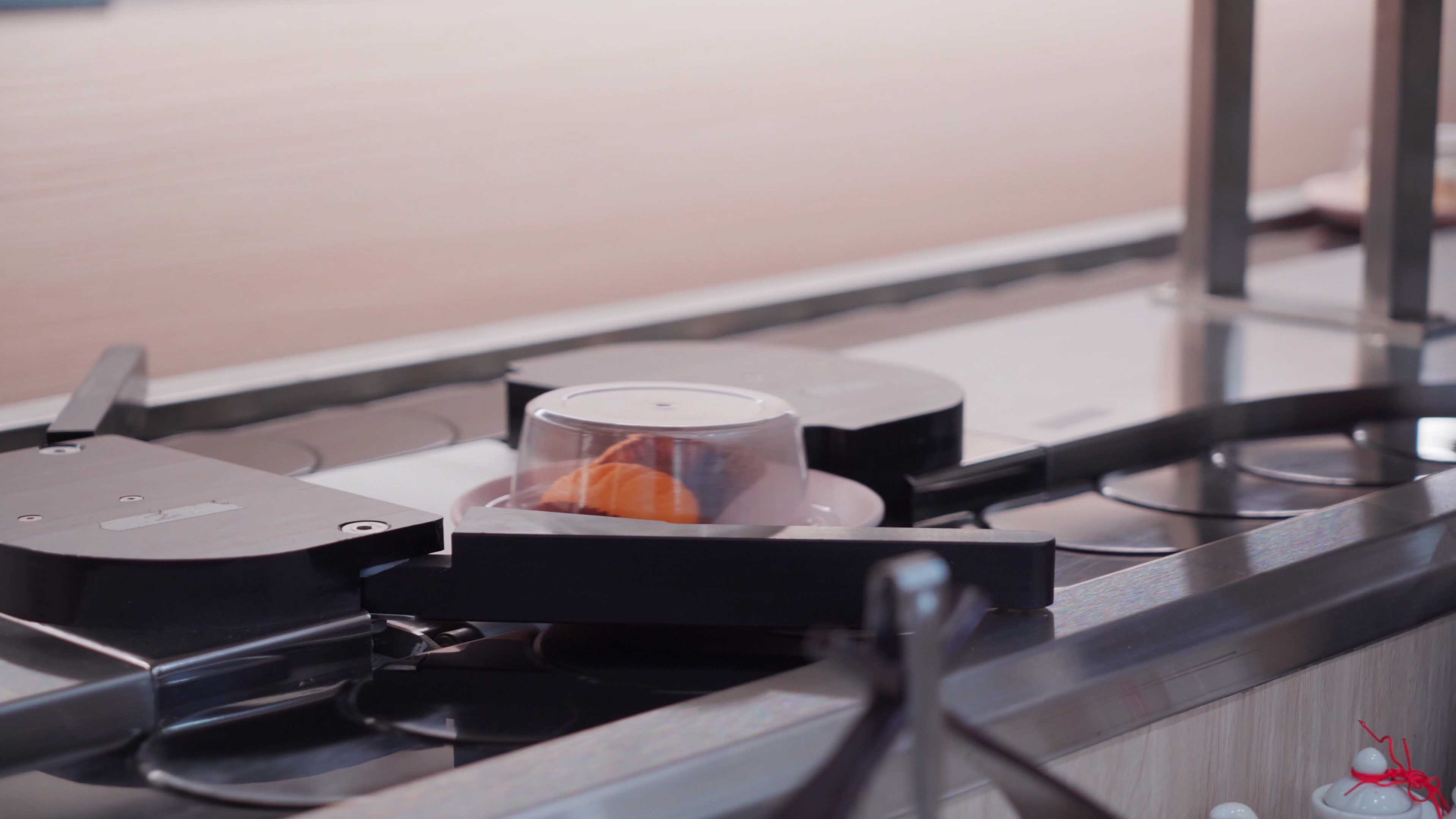
To overcome the challenge of traditional conveyor belts where food loses freshness as it circulates, the current mainstream solution is the "Shinkansen Sushi Train" point-to-point delivery system. Only after a guest orders via tablet does the kitchen prepare the dish fresh, which is then delivered with precision directly to their seat via high-speed tracks.
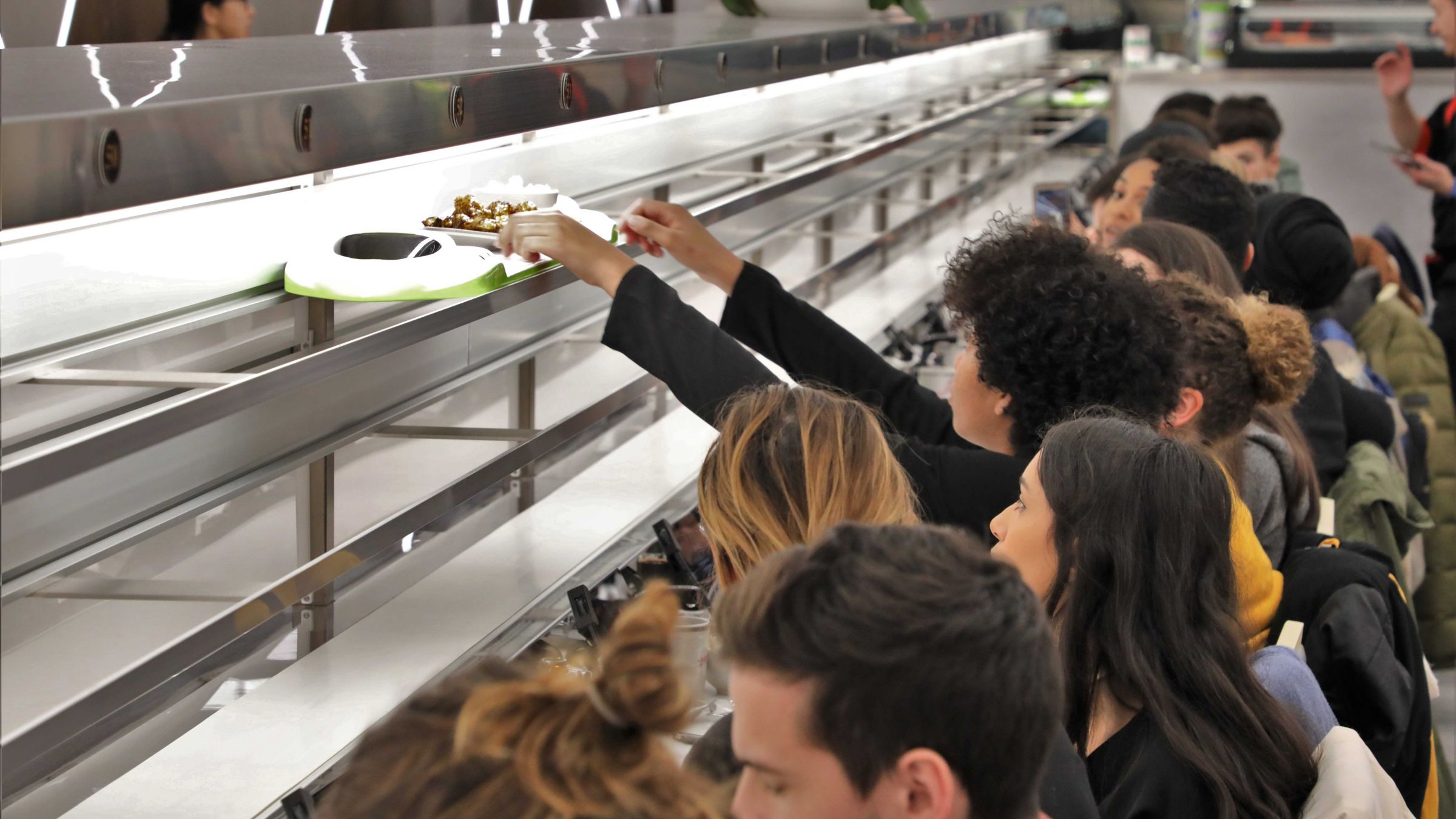
▲ Point-to-point Shinkansen sushi train delivery enables a made-to-order workflow, optimizing inventory and eliminating belt waste.

This workflow completely disrupts the traditional random-access model of rotary sushi. Since dishes no longer circulate aimlessly on a belt, the problem of food drying out or expiring—and the resulting need to discard it—is eliminated, bringing ingredient waste down to nearly zero. In US and European markets, where operating costs are high and food safety standards are exceptionally strict, the Shinkansen Sushi Train system, which guarantees freshness while significantly cutting costs, has already become the industry standard.

Hybrid Model (Traditional Kaiten Sushi + Shinkansen Sushi Train)

Modern restaurant configurations now favor a "Dual-Track" strategy: the lower level features a traditional conveyor belt to maintain a vibrant visual appeal and the convenience of grab-and-go dining, while the upper level utilizes high-speed Shinkansen sushi trains for precise, point-to-point delivery.
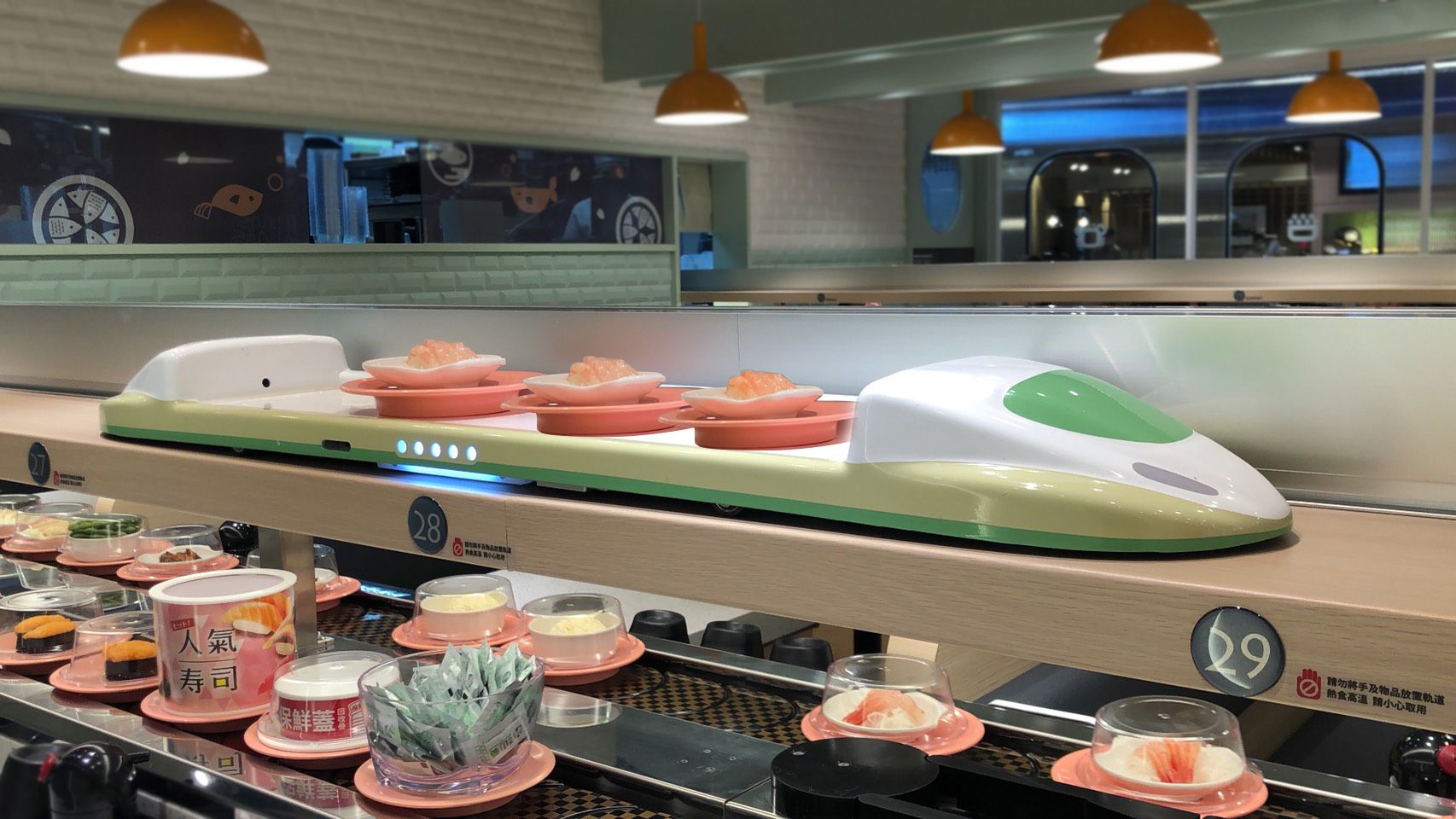
▲ Hybrid model (traditional kaiten sushi + Shinkansen sushi train) balancing ambiance with delivery precision.

This hybrid setup balances atmosphere with operational functionality. The conveyor belt creates a bustling visual feast that draws the eye, while the Shinkansen sushi trains handles made-to-order items or time-sensitive dishes (such as carbonated drinks, desserts, or premium nigiri), ensuring they reach the guest in peak condition. This dual-layer design not only caters to different dining preferences but also significantly boosts overall operational efficiency and service accuracy.

3. How Much Does It Cost? (ROI Timeline)

Initial Capital Expenditure (Startup Costs)

CategoryItem DetailsEstimated Cost (USD)% of Total
Hardware & EquipmentKaiten Sushi/Shinkansen sushi train, robotics, cold storage$92,000 – $177,000+40% - 50%
Renovation & TechDigital ordering, POS integration, fit-out$75,000 – $200,00030% - 40%
ContingencyDeposits, initial inventory, marketing$35,000 – $70,00010% - 20%
TotalEstimated Total Investment$250,000 – $500,000100%

▲ Initial capital expenditure (startup costs)

For a medium-sized facility (approximately 1,400–2,100 sq. ft.) located in a high-traffic commercial hub or shopping mall, the total investment typically ranges from $250,000 to $500,000.

1. Hardware & Equipment (40% - 50%):

  • Food delivery equipment (Conveyor System, Sushi Train):A standard single-tier track costs between $50,000 and $80,000; a dual-tier system featuring a high-speed "Shinkansen sushi train" track starts at $110,000+.
  • Sushi Robotics:Automated nigiri formers, rice washers, and maki cutters average $7,000–$17,000 per unit.
  • Cold Storage:Specialized ultra-low temperature freezers for sashimi-grade seafood require an investment of $35,000–$50,000.
2. Renovation & Technology Integration (30% - 40%):
  • Digital Ordering Systems:Integrated tablet-per-table setups with back-end synchronization cost approximately $17,000–$27,000.
  • Interior Fit-out:Includes specialized plumbing, HVAC, and grease traps compliant with international food safety standards.
3. Contingency & Working Capital (10% - 20%):
  • Deposits & Initial Inventory:Approximately $35,000–$70,000 to secure the lease and procure premium initial stock.

Monthly Operating Cost Structure

The sushi train model follows a distinct financial profile: High COGS (Cost of Goods Sold) offset by Low Labor Costs.

  • Cost of Goods Sold (COGS) 40% - 50%Higher than traditional dining to maintain ingredient quality.
  • Labor Costs 20% - 25%Significant savings due to automation and semi-self-service.
  • Rent & Utilities 15% - 20%Driven by premium locations and high-power refrigeration.
  • Net Profit Margin 10% - 20%Success is highly dependent on high volume and turnover.

ROI & Payback Period

1. Revenue Projection:
  • To ensure profitability, the facility should target a Table Turnover Rate of 1.5 - 2.0 turns per hour during peak periods.
  • Successful locations typically generate monthly gross revenues between $100,000 and $200,000.
2. Payback Period:
  • Optimized Model:With stable foot traffic and efficient waste management, the payback period is 18 to 24 months.
  • Conservative Model:In emerging or lower-traffic zones, recovery may extend to 3 to 5 years.

Key Strategies to Maximize ROI

  • Maximizing Space Productivity:Before a restaurant opens, spatial planning is the single most critical factor in determining profitability. An experienced delivery equipment manufacturer does more than sell hardware—they provide a blueprint for success based on years of proven results.
  • Hong Chiang Taiwan offers clients "Free Floor Plan Consultation" and "Shinkansen Sushi Train Delivery Simulations". Before construction even begins, we help restaurant owners achieve two vital goals:

    1. Maximize Seating Capacity: While average suppliers might only suggest basic counter seating in leftover spaces, we specialize in intelligent layouts that maximize seat count within your footprint, directly increasing your revenue potential.
    2. Maximize Delivery Efficiency: By simulating delivery workflows, we ensure the smoothest operational flow, which significantly boosts turnover rates.

    Choosing Hong Chiang means investing in a high-ROI profit system designed to squeeze the most value out of every square inch of your restaurant.
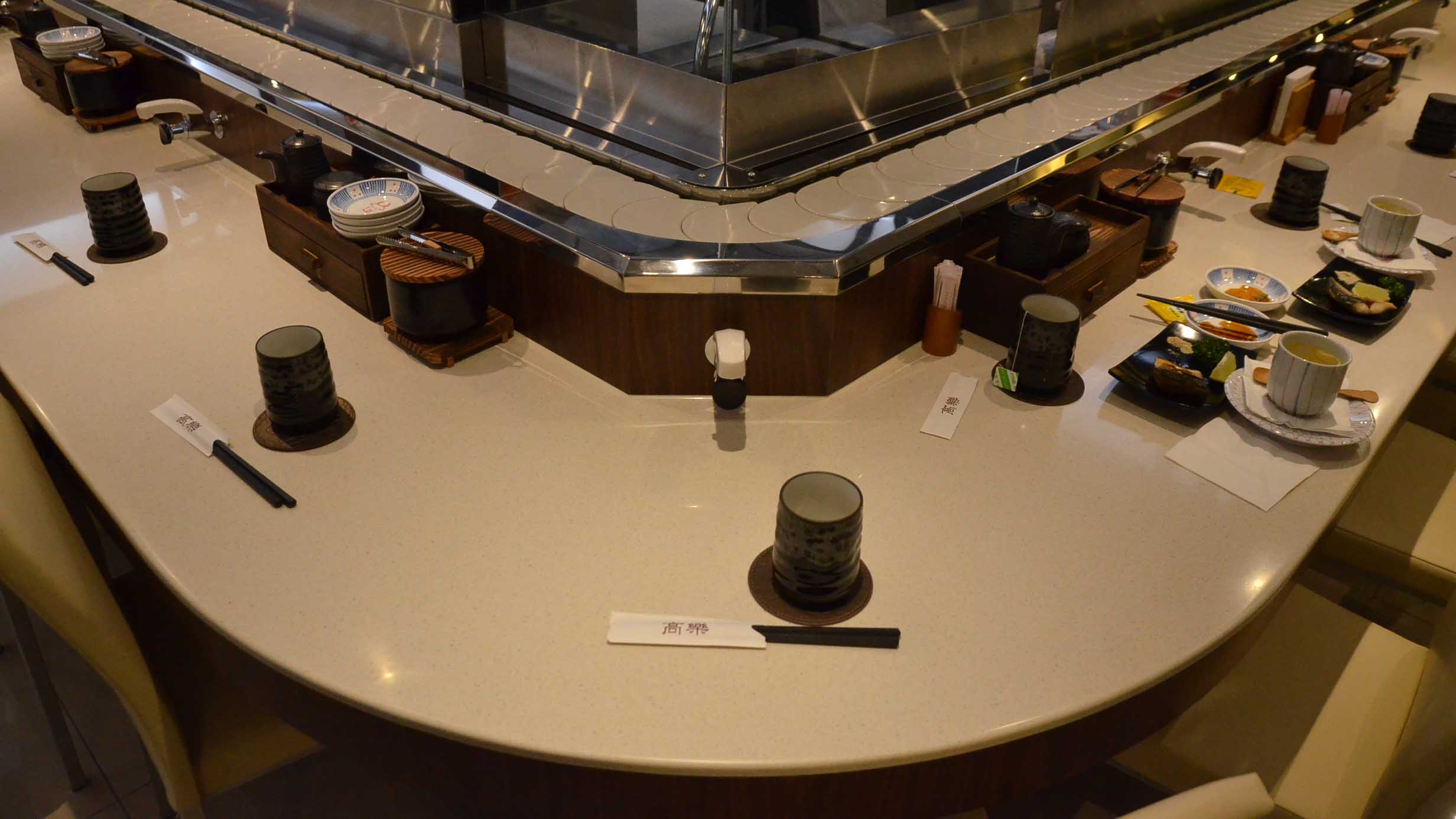
    ▲ The use of limited space with bar seating design.
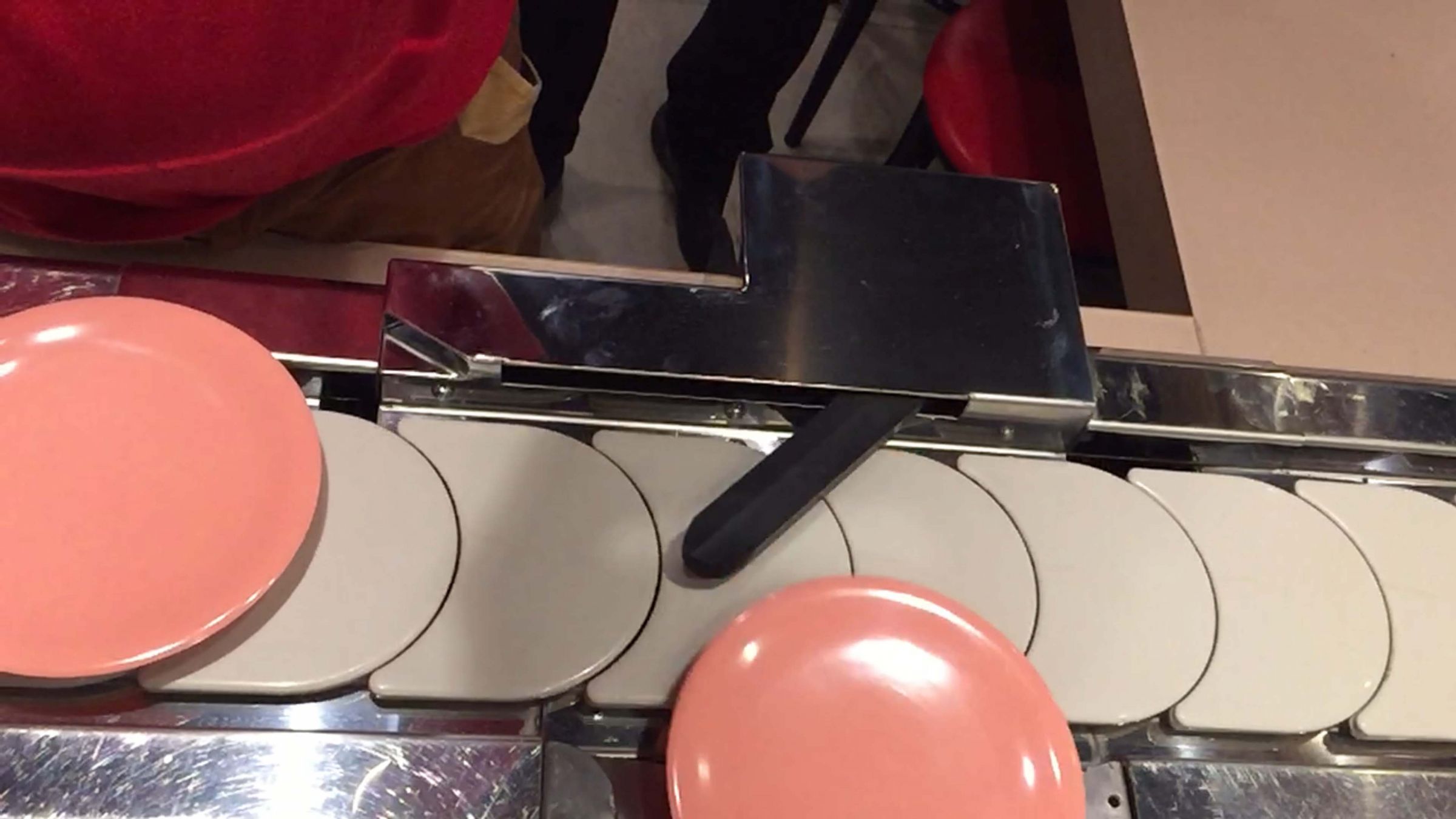
  • Waste Mitigation:To eliminate the "hidden costs" of food waste, smart management is essential. By embedding IC Tracking Chips into each sushi plate, Hong Chiang give every dish a digital identity that can be monitored in real-time.The system analyzes peak-hour data to suggest the ideal mix of dishes on the belt and tracks the exact "time-on-belt" for every plate. If a dish exceeds its freshness window, the system automatically flags or removes it. With this digital freshness control, restaurants can keep their waste rates below 3%—or even lower. This doesn't just guarantee food safety; it directly recovers lost costs and converts them back into net profit.
  • ▲ Leveraging IC chips for smart freshness tracking, precision-controlling food waste within 3%.

  • Eatertainment Value:Utilizing "Gashapon" toys or brand collaborations creates time-sensitive marketing buzz. By leveraging these "eatertainment" factors, operators can increase the Average Order Value (AOV) without adding to food costs—a strategy that has become one of the most talked-about marketing successes in the sushi industry in recent years.
  • ▲ Leverage "eatertainment" to drive higher Average Order Value (AOV) without increasing food cost burdens.


4. Food Safety, Hygiene, and Compliance

In Western markets, food safety is not only a customer expectation—it is a legal, operational, and financial requirement. For conveyor belt sushi restaurants, this requirement is even more stringent due to the visible movement of food in public dining areas.

For operators planning to open a sushi train restaurant in the U.S. or Europe, equipment certification is not optional. It directly affects import approval, restaurant licensing, insurance coverage, and long-term operational stability.

▲ Rigorous food safety inspections are mandatory for equipment in Western markets to meet strict regulatory compliance.

Unlike some Asian markets where regulations may be more flexible, most European countries and North America require restaurant equipment to comply with multiple overlapping regulatory frameworks, including:

  • Import and Customs Delays or Rejection:Non-certified equipment may be held indefinitely at customs, subjected to additional testing at the importer’s expense, or rejected entirely and forced to be re-exported or destroyed—delays that can severely derail opening schedules, lease agreements, and investor timelines.
  • Failure to Obtain Restaurant Operating Permits:Since health and fire authorities in the U.S. and Europe routinely inspect electrical safety, food-contact materials, and hygienic design, equipment lacking recognized certification may result in the denial of operating permits, revocation of conditional approvals, or the forced removal of installed systems—a risk that is especially high for conveyor belt sushi, which faces extra scrutiny due to food exposure concerns.
  • Insurance Coverage and Liability Exposure:Many restaurant insurance policies in Western markets require that all installed equipment be certified and compliant; consequently, using uncertified sushi train systems can lead to higher premiums, limited coverage exclusions, or denied claims in the event of fire, injury, or food safety incidents—effectively shifting the full weight of liability directly onto the restaurant owner from a risk management perspective.
  • Operational Disruption After Opening:Even if a restaurant initially opens, uncertified systems can trigger long-term issues such as forced shutdowns following surprise inspections, mandatory system replacements due to regulatory updates, or the inability to expand or franchise due to compliance gaps—disruptions that prove far more expensive than securing proper certification from the outset.

▲ Using uncertified equipment shifts all liability to the operator and may lead to mandatory closure in severe cases.

As a result, regulators apply stricter scrutiny to:

  • Hygiene design (cleanability, contamination prevention).
  • Electrical and mechanical safety.
  • Food exposure time and freshness control.

Hong Chiang Technology's conveyor belt sushi and Shinkansen sushi train are developed during the design phase in accordance with CE and UL international certification standards, directly meeting the regulatory requirements of the EU, UK, and North American markets.

5. Peripheral Systems for Sushi Train Operations

In modern conveyor belt sushi restaurants, the core sushi train system is only one aspect of operational efficiency.
What truly differentiates brands is often the level of integration of peripheral systems—these directly impact food safety, customer experience, table turnover rate, and labor costs.

The following are key peripheral systems that should not be overlooked when planning equipment for a conveyor belt sushi restaurant.

  • Freezing Plate:

    Chilled freshness plates combined with patented insulated capsule lids are designed to protect sushi and fresh dishes from ambient temperature fluctuations. The sealed structure effectively isolates external heat, slows down temperature loss, and reduces bacterial growth.

    This system ensures food remains visually appealing and fresh for longer periods on the conveyor, helping restaurants maintain consistent quality standards while addressing Western consumers’ strong focus on food safety and hygiene.

  • Freshness System:

    The Food Freshness System is an intelligent monitoring solution that tracks how long each plate remains on the sushi train. Using embedded chips or sensors, the system automatically identifies items that exceed preset freshness limits and removes them from circulation.

    ▲ Freshness system monitors freshness and automatically rejects items that exceed preset safety or peak flavor windows.

    By automating freshness control, restaurants can prevent food from staying on the conveyor too long, reduce food safety risks, and maintain strict quality standards without relying solely on manual checks.

  • Belt Transfer System (for Distance Control):

    The Bridge System allows operators to dynamically shorten the food circulation route during off-peak hours. By activating specific bridge points, food can be directed only to designated seating zones, significantly reducing travel distance.

    ▲ Belt Transfer System: Shortening off-peak delivery routes for faster service.

    This results in faster delivery times, improved freshness perception, and optimized energy usage—making it an ideal solution for managing efficiency during low-traffic periods.

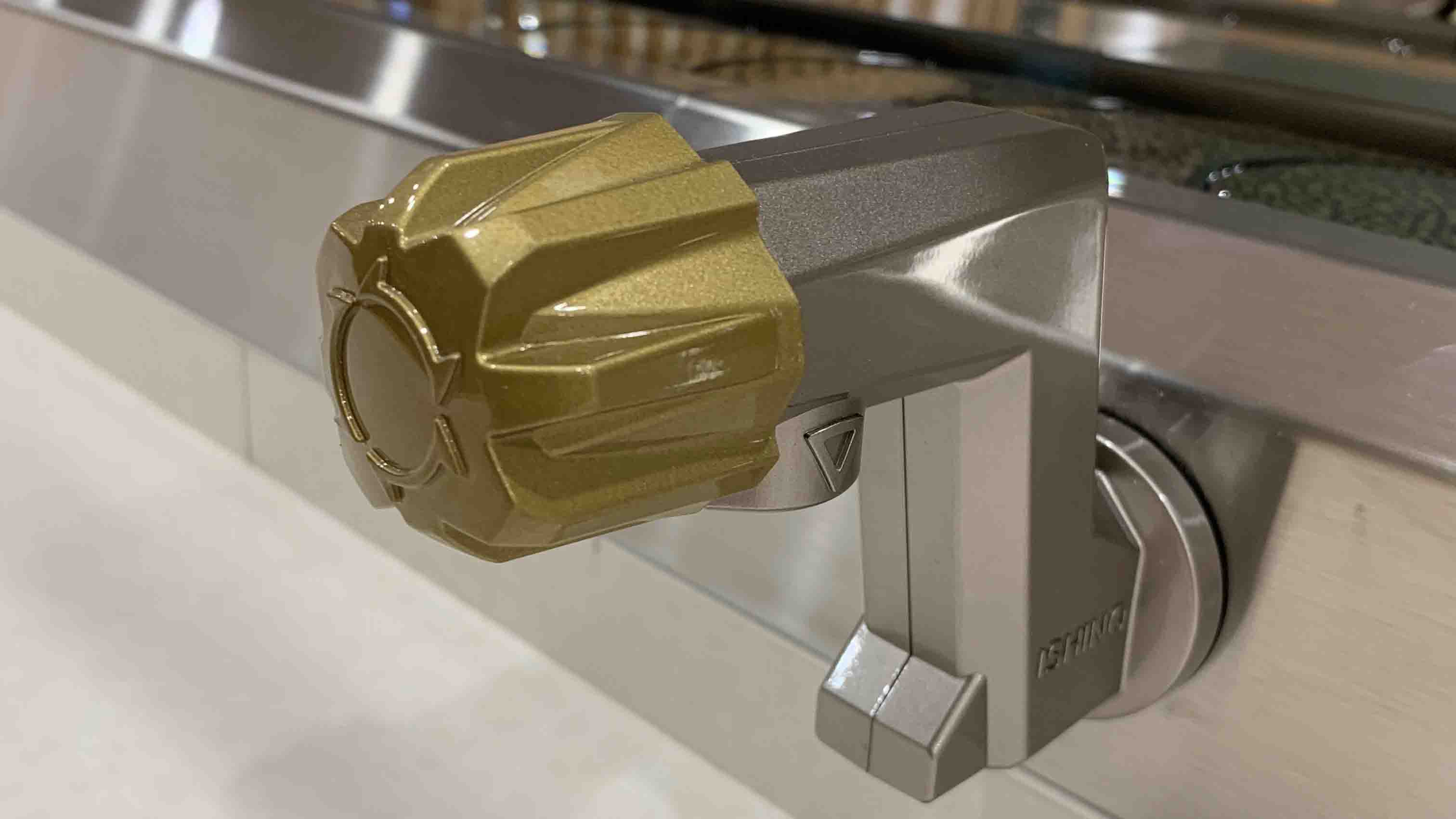
  • Hot Water System:

    The built-in hot water supply system is seamlessly integrated into the sushi conveyor counter. Equipped with digital temperature control, it provides stable, consistent hot water directly at the table.

    ▲ Table-integrated hot water faucets enable self-service, significantly reducing front-of-house service workload.

    Customers can conveniently prepare tea without waiting for staff assistance, enhancing the self-service dining experience while reducing front-of-house workload.

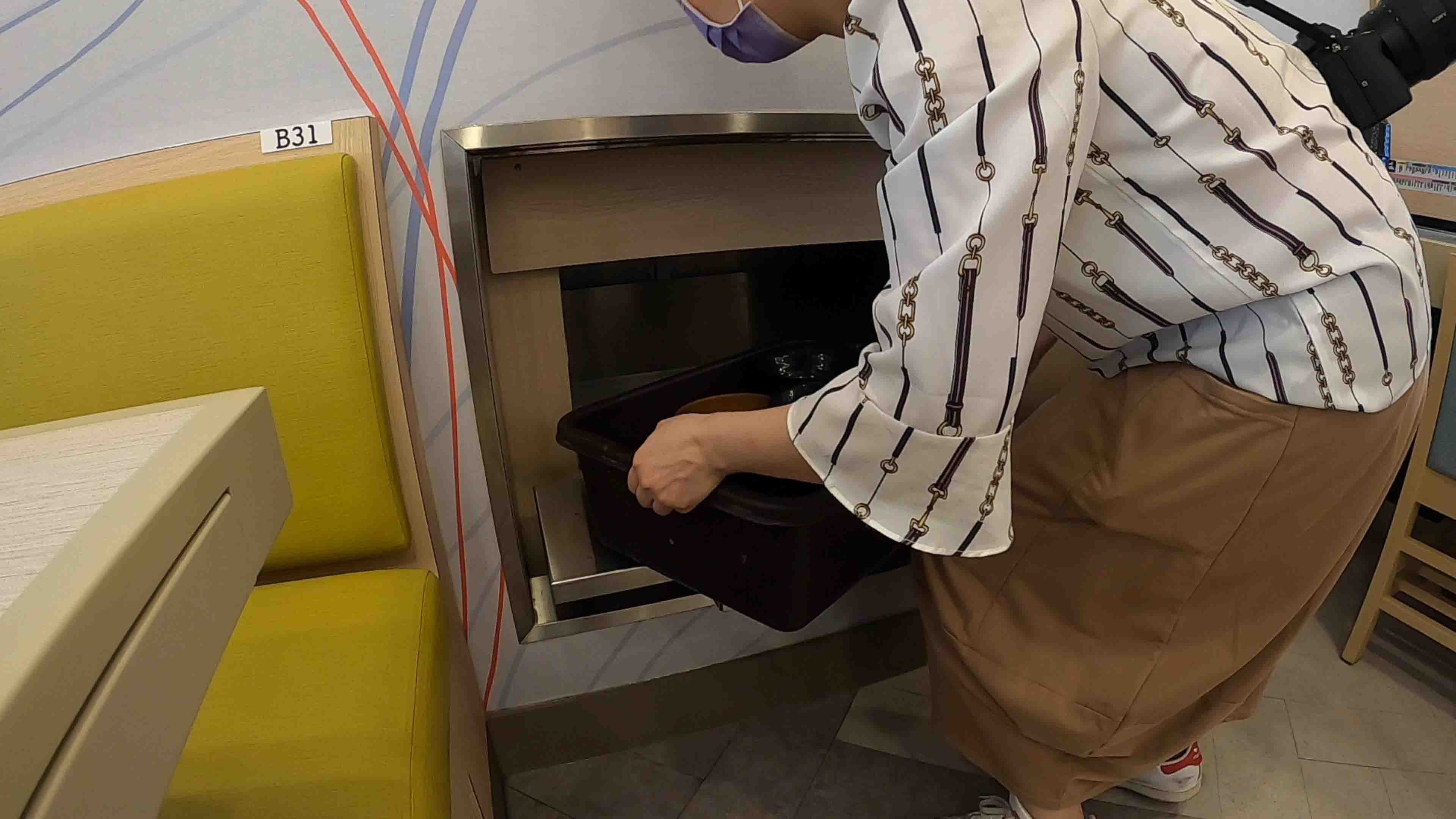
  • Sushi Plate Slot System:

    The hidden plate return system is installed directly in front of each seat, allowing guests to dispose of used plates immediately after finishing their meal.
    This design keeps tabletops clean, improves dining aesthetics, and reduces the need for frequent staff intervention, creating a smoother and more enjoyable dining environment.

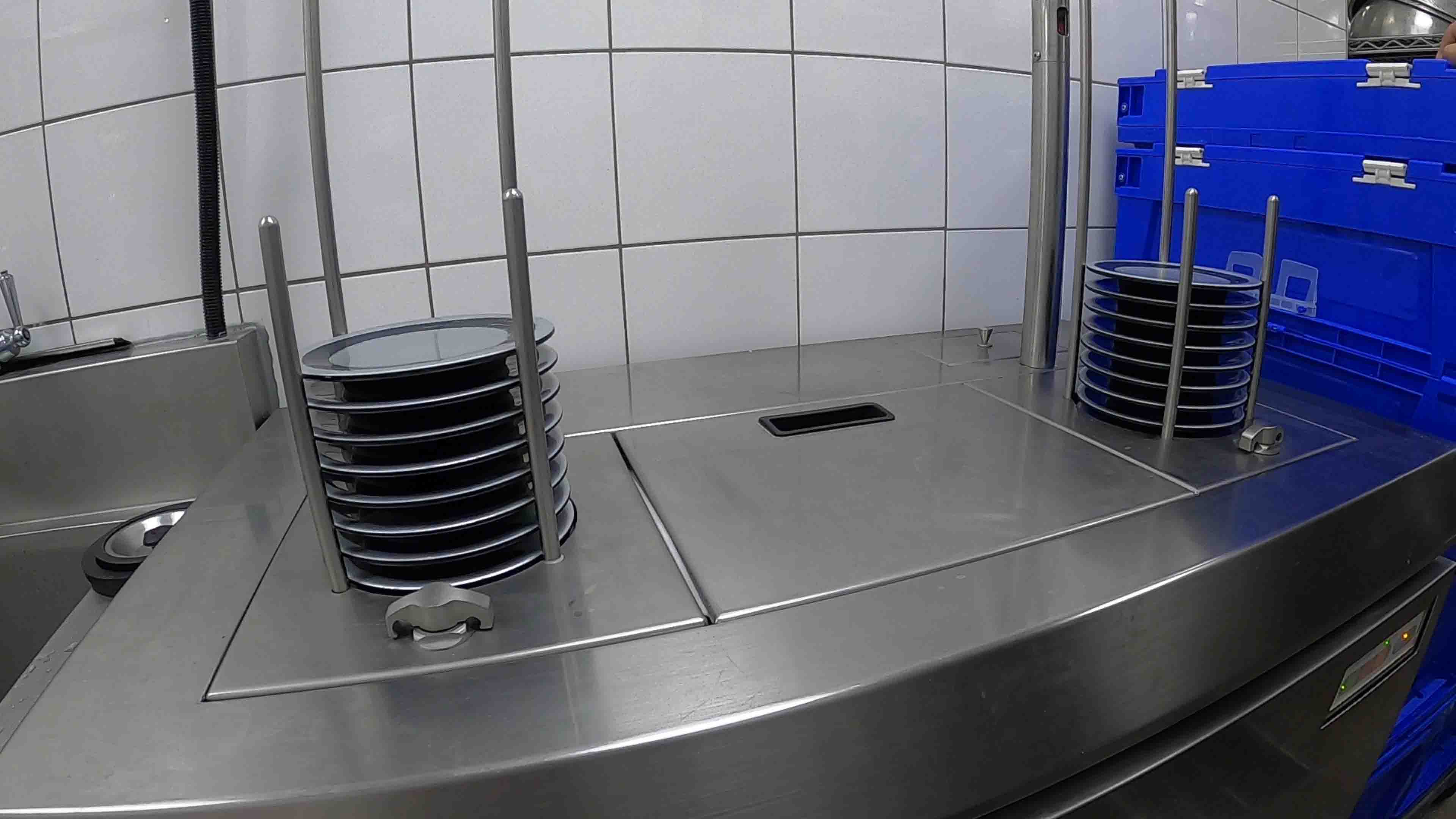
  • Plate Washing Machine:

    The automatic sushi plate dishwasher is specifically designed for high-volume conveyor sushi restaurants. It integrates washing, sanitizing, and hot-air drying into one compact unit.

    ▲ Engineered for high-frequency use, the plate washing machine maximizes back-of-house efficiency while ensuring peak hygiene standards.

    Fast, safe, and hygienic, it significantly reduces labor requirements while ensuring consistent cleaning quality, making it an essential backend solution for efficient operations.

  • Belt Basket Delivery System:

    The roller-type tray basket conveyor transports collected plate baskets directly to the kitchen area. This streamlines clearing operations, improves table turnover rates, and prevents congestion in both front-of-house and back-of-house areas.

  • ▲ Belt basket delivery system: Faster turnover, smoother operations.

Why Peripheral Systems Matter?

Peripheral systems transform a sushi train from a food delivery mechanism into a fully optimized dining ecosystem—enhancing safety, efficiency, and guest satisfaction.

Why Choosing the Right Sushi Train Supplier Is Critical

When planning a conveyor sushi restaurant, many operators focus heavily on menu design, location, and interior aesthetics. However, one of the most decisive factors for long-term success is often underestimated::the choice of sushi train equipment supplier.

A sushi train system is not a decorative feature—it is a mission-critical infrastructure that directly impacts food safety, labor efficiency, customer experience, regulatory compliance, and long-term ROI. Once installed, replacing or upgrading the system is both costly and disruptive, making the initial supplier selection a strategic decision rather than a simple procurement task.

A common mistake among first-time operators is viewing a sushi train as standalone hardware. In reality, it is a fully integrated operational system that must align with:

  • Restaurant layout and seat planning
  • Peak vs. off-peak traffic management
  • Hygiene workflows and food safety protocols
  • Front-of-house and back-of-house coordination
  • Local regulations and inspection standards

▲ Case Study (Hong Chiang): Optimized spatial planning significantly increased seating capacity, accelerating revenue generation.

Suppliers who only sell equipment without understanding restaurant operations often create systems that look impressive on day one, but introduce inefficiencies, compliance risks, and high maintenance costs over time.

What Defines a Reliable Sushi Train Partner?

A professional sushi train supplier should demonstrate strengths in five key areas:

  1. Proven Engineering Stability:Systems designed for continuous, high-volume operation
  2. Regulatory Readiness:Certified equipment that meets international standards
  3. Operational Intelligence:Features that improve turnover, freshness, and labor allocation
  4. Customization Capability:Ability to adapt layouts, functions, and workflows
  5. Long-Term Support:Global service experience and lifecycle planning

Hong Chiang Technology’s Competitive Advantages

With over 22 years of experience and installations in 45 countries, Hong Chiang Technology is not simply an equipment manufacturer—it is a restaurant automation partner.

Key advantages include:

  • International Certifications

    Both conveyor belt sushi and Shinkansen sushi train(delivery systems) are CE and UL certified, enabling smoother approval in the US, EU, and UK markets.

  • Integrated System Architecture

    From freshness monitoring and belt transfer system, washing, and logistics automation, Hong Chiang provides a unified ecosystem rather than fragmented components.

  • Operational-Focused Design

    Features such as freshness control systems and dynamic bridge routing are developed based on real restaurant traffic patterns, not just mechanical feasibility.

  • Hybrid Redundancy Layouts

    Conveyor + Shinkansen sushi train combinations ensure operational continuity even during maintenance or peak load conditions.

  • Global Project Experience

    Having supported brands across diverse regulatory and cultural environments, Hong Chiang understands how to localize solutions without compromising compliance.

▲ Hong Chiang has exported its smart catering equipment to over 5,000 restaurants in over 45 countries worldwide.

A Long-Term Investment, Not a Short-Term Purchase

Choosing a sushi train supplier should be approached with the same rigor as selecting a business partner. The right supplier reduces risk, accelerates time to market, and supports sustainable growth. The wrong choice can lock operators into inefficiencies that are difficult and expensive to correct.

Hong Chiang Technology’s approach combines engineering reliability, regulatory compliance, and eatertainment psychology, ensuring that the sushi train system supports not only daily operations but also long-term brand development and ROI.

▲ We ensure every sushi train system isn't just operational, but a strategic asset driving long-term value and ROI.

6. Why Choose Hong Chiang

Choose Hong Chiang Technology: Your Most Strategic Partner for the U.S. Market

For operators planning to open in the United States, there has never been a better time to source equipment from Taiwan. Taiwan-made automated systems currently benefit from highly competitive import tariff rates, offering a significant cost advantage over other regions. Beyond tax savings, Hong Chiang Technology ensures rapid lead times to keep your opening schedule on track and provides a comprehensive global service network for reliable on-site support and technical expertise. By partnering with us, you aren't just saving on initial costs—you are securing a high-quality, compliant, and fast-responding foundation for your restaurant’s long-term success.

Why Made in Taiwan? US Import Tariff Advantage

For US business owners, the true cost of equipment includes import duties. Choosing Hong Chiang (MIT) allows you to bypass heavy tariffs while securing premium quality.

Country / Region of OriginAvg. Import Duty (US)Additional TariffsCompetitive Evaluation
Taiwan0% - 3.4%NoneBest Choice: High Quality + Tax Efficiency
China0% - 3.4%25% - 35% (Section 301)Poor: High additional costs due to trade wars
Japan0% - 3.4%NoneHigh: Excellent quality but higher base price
South Korea0% (KORUS FTA)NoneModerate: Free trade but less customization
European Union (EU)0% - 3.4%Varies by itemModerate: High shipping costs & complex specs
The Hong Chiang Edge: By choosing our "Made in Taiwan" solutions, you can save over 25% in potential tariffs, reinvesting those savings into your restaurant's growth and customer experience.

The Complete Guide to Opening a Conveyor Belt Sushi Restaurant | Sushi Train ROI | Taiwan Sushi Bar Conveyor Belt Manufacturer | Hong Chiang

Based in Taiwan since 2004, Hong Chiang Technology Co., LTD has been a conveyor belt manufacturer for sushi restaurants and dining tables. Our main food delivery systems, include Sushi Conveyors, Conveyor Belts, Sushi Trains, Tablet Ordeing Systems, Display Conveyors, Express delivery systems, Sushi Machines, Tableware and Sushi Plates, which are sold in over 40 countries with seasoned installation experience.

With more than 20 years manufacture experience, we have the unique ability to design and innovate the new equipment accessories of the Sushi Train & Conveyor Belt. Hong Chiang Technology provides total Intelligent Restaurant Automation solutions. Deploy our high-efficiency Food Delivery Robot, Sushi Conveyor Belt, Bullet Train System, and seamless Tablet/Mobile Ordering System to solve labor shortages. Get a quote for our Made in Taiwan food service equipment and elevate your dining experience! We focus on Automatic System for restaurants, including Food Delivery Robot, Bullet Train system, Conveyor Belt System, Revolving Shshi Belt System, Tablet Ordering System, Mobile Ordering System, Display Conveyor, Sushi Machine, Customized Food Delivery System, and Tableware, Welcome to contact us. Hong Chiang has been focusing on developing various sushi bar conveyor belts to help different restaurants and other industries to reduce labor costs and stay competitive.

Hong Chiang Technology has been offering customers sushi conveyor belts since 2004, both with advanced technology and 20 years of experience, Hong Chiang Technology ensures each customer's demands are met.