📌 Core Summary
In 2026, the U.S. restaurant industry faces a severe structural labor shortage challenge, with over 60% of operators struggling to fill vacancies and labor costs skyrocketing 34% within three years. By implementing Hong Chiang Technology's Sushi Conveyor Belt systems and intelligent Food Delivery Robots, restaurants can reduce FOH labor costs by up to 50%, increase table turnover by 12%–22%, and most operators can achieve full ROI within 8–12 months. With the global restaurant tech market projected to reach $6.9 billion in 2026, intelligent automation has become the inevitable path for U.S. restaurants to maintain competitiveness.
1. Current Situation: 2026 U.S. Restaurant Industry "Data Warning"
In 2026, the U.S. dining market is no longer just facing a temporary shortage; it has entered the "deep water zone" of structural labor shortage. Here are the latest stats from industry research:
⚠️ Three Key Data Points
① Normalizing Labor Shortage: Approx. 60% of restaurant owners report difficulty hiring enough staff, leading 39% to lose potential revenue due to understaffing.
② Surging Costs: Between 2024 and 2026, average labor costs in the U.S. restaurant industry increased by 34%. In regions like California, wage hikes have squeezed traditional service profit margins to below 5%.
③ High Turnover Costs: The average cost to replace a non-managerial FOH employee is as high as $2,300 USD (including recruitment and training), a heavy burden for an industry with high turnover rates.[1]
1. A Permanent Shift in Labor Structure
The restaurant industry has long struggled with high turnover, but by 2026, this has evolved into a structural labor shortage. Younger generations are increasingly unwilling to take on high-intensity, low-flexibility front-of-house roles.
2. Escalating and Uncontrolled Operating Costs
Rising minimum wages, combined with increasing insurance expenses and food inflation, have made traditional labor-heavy service models financially unsustainable. In regions like California and New York, payroll for a mid-sized restaurant can now exceed 34% of total revenue.
3. Transformation in Consumer Behavior
In the post-pandemic era, consumers demand not only speed but also accuracy and hygiene. Human-dependent service models are more prone to order errors, missed items, and operational bottlenecks during peak hours.

▲ Automation replaces manual labor, effectively addressing the 2026 U.S. hospitality labor crisis.
Faced with rising labor costs and efficiency challenges, restaurant automation is no longer an option—it has become a standard requirement. Faced with a crisis that cannot be solved simply by "raising wages to compete," more U.S. restaurant operators are choosing to redesign their service architecture— replacing repetitive labor with Intelligent Automation Equipment, allowing limited human resources to focus on high-value customer interactions.
2. Solution: From "Manual Service" to "Intelligent Collaboration"
The global food automation market is expected to reach $18.12 billion by 2026.[2] Hong Chiang Technology's solutions are at the core of this transformation, spanning two major product lines:
1. Sushi Conveyor Belt Systems
Also known as Kaiten-sushi or revolving sushi, it is no longer just a novelty. In today's industry, a well-designed Sushi Conveyor Belt system is a complete automated operating system integrating customer experience, kitchen rhythm control, and labor optimization. For North American and European operators, it is a strategic platform that reduces FOH reliance, stabilizes output during peak hours, and creates predictable returns through a quantifiable Sushi Conveyor Belt ROI.
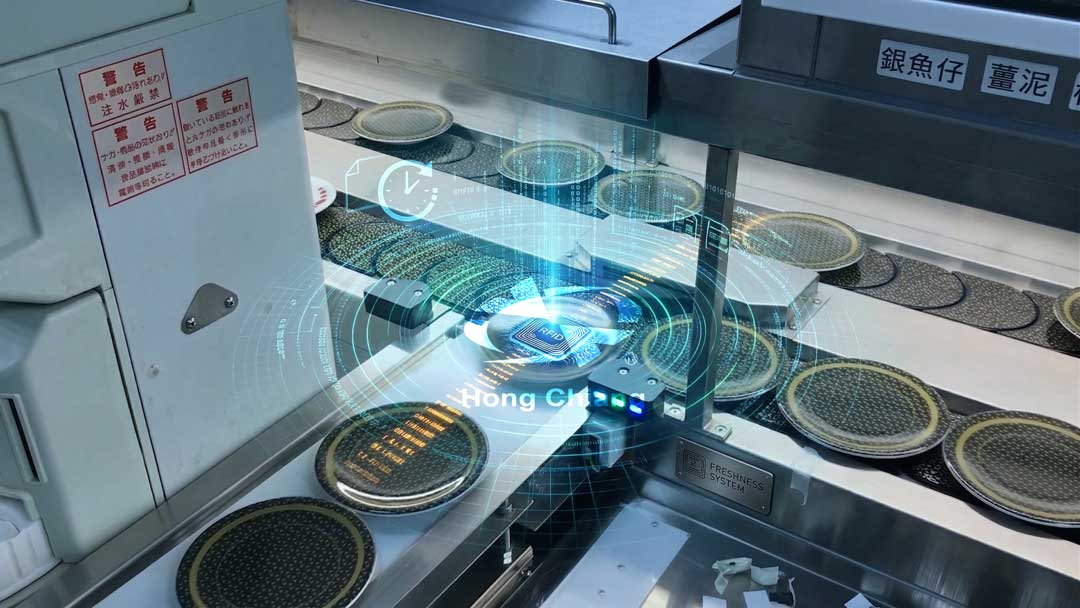
▲ Hong Chiang's intelligent Sushi Conveyor Belt integrates RFID freshness tracking to meet U.S. FDA standards.
- Visual Appeal: Using conveyor belts to display ingredients not only stimulates appetite but also enables a “sit-and-eat” experience, eliminating the need to wait for ordering.
- Precision Freshness Control: Combined with RFID technology, AI tracks each plate's freshness in real-time, meeting strict FDA standards and reducing waste by 15%.
2. Food Delivery Robots / Sushi Train
Leading the new trend of smart dining, maximizing restaurant space utilization. No more worrying about competing for paths with guests, and no space limitations. Track-based Food Delivery Robots provide an excellent choice for the industry, boosting your business with maximum floor efficiency.
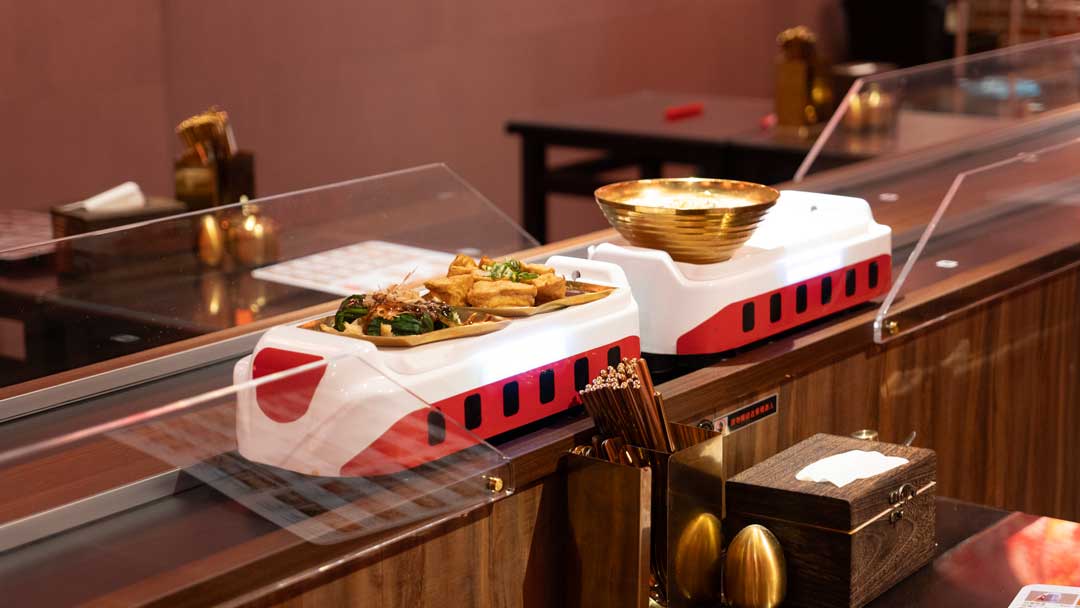
▲ Hong Chiang's autonomous Food Delivery Robots / Sushi Train save over $158,400 USD in annual labor costs.
- Efficiency Data: Food delivery robots can increase delivery speed by over 20%, eliminating lost turnover opportunities during peak hours.
- Liberating Labor: Food delivery robots save FOH staff over 1,200 minutes (approx. 20 hours) of repetitive walking per day, saving operators $158,400 USD annually in labor-walking costs.
- Precision Delivery: By integrating AI-powered obstacle avoidance and navigation, food delivery robots can move seamlessly through crowded dining areas and deliver dishes accurately to each table.
- 24/7 Stability: Robots don't tire or need breaks, ensuring stable delivery quality and supporting Contactless Delivery, satisfying U.S. consumers' high hygiene requirements.
3. ablet & QR Ordering
Facing a growing labor shortage and rising staffing costs in the restaurant industry, multi-functional ordering systems—such as tablet-based ordering and QR code menus—are more than just a tech upgrade; they’re a core solution for optimizing workforce efficiency and allocation.
- Reduce front-of-house pressure: Orders are sent directly to the kitchen through the system, eliminating handwritten tickets and repeated trips to enter orders. Staff can stay focused on maintaining a clean dining environment and delivering high-quality seating and service. With guests placing their own orders, restaurants can cut front-of-house ordering time by over 30%.
- Data-driven management: The system automatically analyzes top-selling items, enabling operators to quickly decide which dishes to keep or streamline. This reduces unnecessary prep work, gives better visibility into food cost control, and minimizes waste with data-backed decisions.
- Increase average check size: By incorporating gamification into the ordering experience, operators can offer incentives like “Add one more appetizer to enter a giveaway” or “Collect three digital badges to redeem a dessert.” These built-in prompts guide guests to add items in a natural, non-intrusive way—often proving more effective and precise than traditional upselling by staff.
3. In-Depth Analysis: Financial Returns of Automation (ROI)
Investing in automation is not just an expense; it's a high-return asset optimization. Here is a financial analysis based on actual cases:
1. Immediate Labor Cost Savings
| Metric | Before (Traditional) | After (Automated) | Improvement |
|---|---|---|---|
| FOH Staffing | 6–8 people | 2–3 people (focus on service) | 60–70% Reduction |
| Monthly Wages | Baseline | Save $12,000–$18,000 USD/mo | Significant Decrease |
| Replacement Costs | $2,300 USD/per person | Drastically Lower | Risk Mitigation |
| Delivery Efficiency | Baseline | Increase 20%+ | +20% |
▲ Key operating metrics before and after Hong Chiang automation (based on real client cases).
2. Revenue Growth
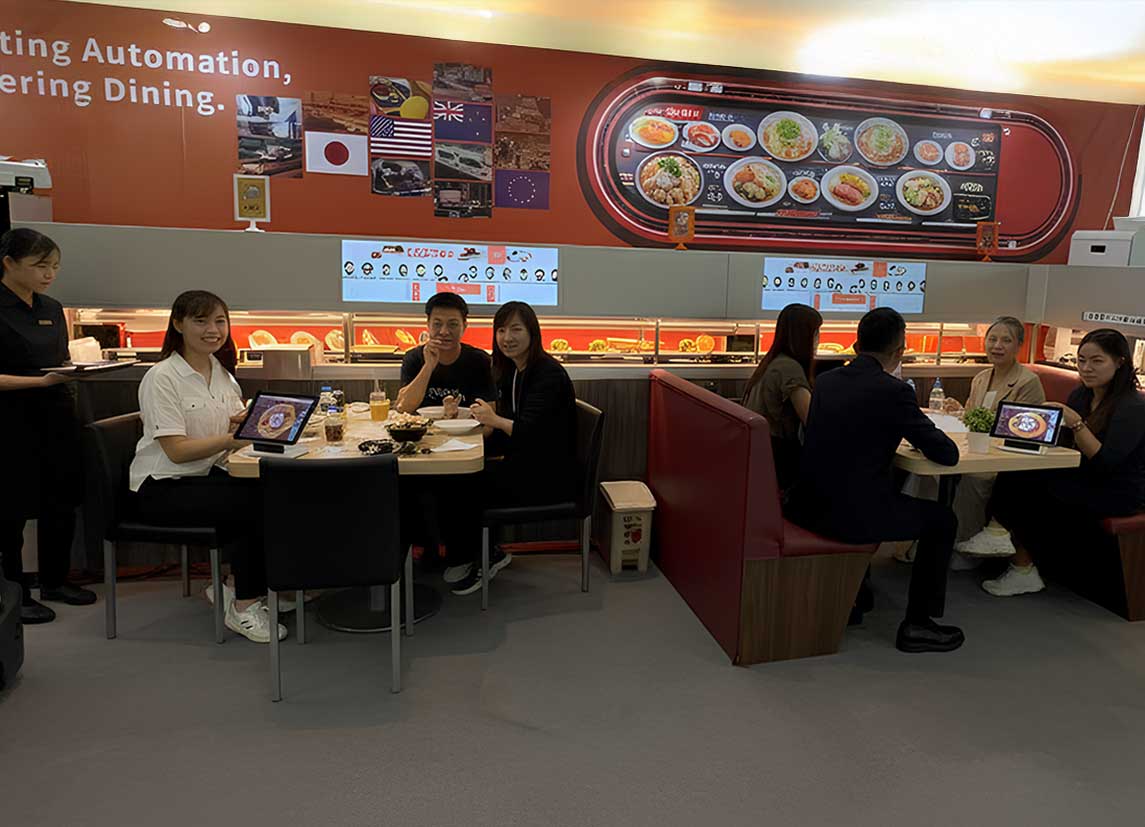
▲ Paired with tablet ordering, Food Delivery Robots significantly boost table turnover.
- Increased Turnover: Using Tablet Ordering Systems with automated delivery can increase average turnover by 12% to 52%.
- Inventory Forecasting: AI systems predict peaks using historical data, reducing kitchen bottlenecks and further increasing net profit margins.
💡 ROI Payback Period
With monthly savings of $12,000–$18,000 USD plus revenue gains from turnover, most operators achieve break-even within 8 to 12 months.
4. Why Choose Hong Chiang Technology from Taiwan?
Hong Chiang Technology provides more than hardware; we provide system integration meeting international standards, making us the best partner for U.S. restaurant transitions.
Core Competitive Advantages
- Regulatory Compliance (CE & UL): Equipment is fully CE and UL certified, a must-have for the U.S. market, aligning with FDA and local health department requirements.
- Extreme Durability (Leading MTBF): Built for high-intensity U.S. environments, our industrial-grade conveyors and robots offer industry-leading Mean Time Between Failures (MTBF).
- 22 Years Experience, 45+ Countries: Hong Chiang has helped over 3,000 restaurants worldwide, deeply understanding global regulations and market differences.
- End-to-end customization and system integration expertise: From sushi conveyor belt systems and high-speed “sushi train” delivery tracks, to RFID-based freshness tracking, tablet ordering, and POS integration—we deliver fully customized, one-stop solutions that minimize integration risk.

▲ Hong Chiang has installed automated equipment in over 3,000 restaurants across 45+ countries.
5. Tariff Advantages: The Best Timing to Enter the U.S. Market
For U.S. owners, tariffs are key to profitability. Hong Chiang's Taiwan-made equipment enjoys highly competitive tariff rates.
| Export Country/Region | Avg U.S. Import Tariff | Additional Punitive Tariffs | Competitiveness Evaluation |
|---|---|---|---|
| 🇹🇼 Taiwan | 0%–3.4% | None | Best: Stable quality & tax advantage |
| 🇨🇳 China | 0%–3.4% | 25%–35% (Section 301) | Very Low: High taxes surge costs |
| 🇯🇵 Japan | 0%–3.4% | None | High: Excellent but higher unit price |
| 🇰🇷 South Korea | 0%(FTA Offers) | None | Moderate:Tariff-free, but offers limited customization flexibility |
| 🇪🇺 EU | 0%–3.4% | None | Moderate:High shipping costs and complex specification compatibility |
▲ Comparison of U.S. import tariffs by country (2026 rates).
Hong Chiang Advantage: By choosing Taiwan's Hong Chiang Technology, you can save over 25% in tariff expenditures while gaining CE/UL certified top-tier automation.
6. Frequently Asked Questions (FAQ)
7. Conclusion: 2026 is the Watershed for the Dining Industry
2026 is the turning point. Choosing to rely on an unstable labor market or switching to data-driven automated operations will determine competitiveness for the next five years.
🚀 Take Action Now
Want to know how Hong Chiang can boost your restaurant? Contact our consultants for a Free Layout Design.
→ Consult Hong Chiang Technology
📚 Data Sources
- 7shifts — Restaurant Workforce Report 2025: Labor Cost & Turnover Statistics
- Research and Markets — Food Automation Market Analysis - Forecast to 2030
- National Restaurant Association (Restaurant.org) — 2026 Industry Economic Insights & Labor Reports
- Business Research Insights — Global Restaurant Technology Market Size & Growth Trends (2026–2035)
- Forbes — How AI and Robotics are Transforming the ROI of Modern Dining