
Education Industry | Sushi Conveyors for Restaurants Manufacturer | Hong Chiang
Library Automated Materials Handling (AMH) Book Sorter. Hong Chiang's automated library book sorter routes returned items into 10 sort bins at the moment of check-in. A dual-deck track fits the original footprint, a tuned drop mechanism keeps noise low enough to install beside a study room, and a custom API module integrates with closed ILS platforms. Back-end staff time falls by more than 50%. Hong Chiang Technology is a high-quality Education Industry, food delivery robot, sushi conveyor belt, food conveyor belt, restaurants robot, tablet ordering system , self-ordering kiosks, sushi train, rail food delivery system, express food delivery track manufacturer from Taiwan since 2004. With more than 20 years manufacture experience, we have the unique ability to design and innovate the new equipment accessories of the Sushi Train & Conveyor Belt.
Education Industry
Hong Chiang's automated library book sorter routes returned items into 10 sort bins at the moment of check-in. A dual-deck track fits the original footprint, a tuned drop mechanism keeps noise low enough to install beside a study room, and a custom API module integrates with closed ILS platforms. Back-end staff time falls by more than 50%.
Library Book Sorting,
Done at Check-In
Hong Chiang's automated library book sorter routes every return into one of 10 sort bins the moment it is checked in, on a dual-deck track that fits the original footprint. Back-end staff time drops by 50% or more, and it runs quietly enough to sit next to a study room.
Live Site Demo Video
A working library installation. Watch returns drop into the right bin on their own.
Shown as Available, Not on the Shelf
The catalog flips to "Available" at check-in. The book reaches the shelf hours later. That gap is why patrons can't find it.
Patron Returns the Item
Check-in updates the ILS. The catalog now shows "Available."
STEP 01Everything Lands in One Bin
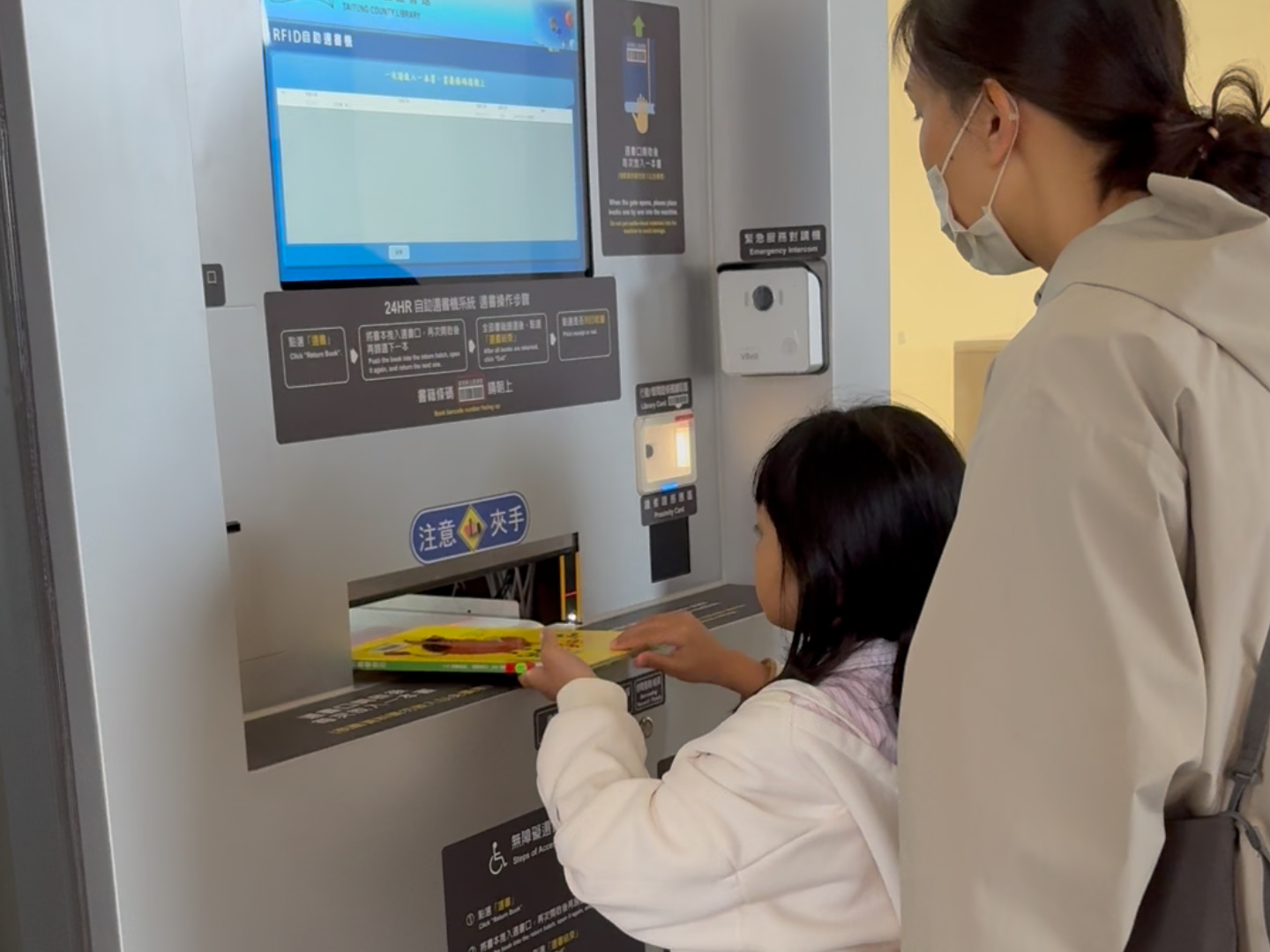
A standalone RFID return kiosk deactivates security, then drops every item into the same bin.
STEP 02Staff Sort by Hand
Staff match call numbers and load carts. It is slow, and items end up misshelved.
STEP 03Cart Goes to the Stacks
Hours later, sometimes half a day, the book is shelved. The patron has already made a trip for nothing.
STEP 04How a Library Book Sorter Works
A book sorter is the core of a library automated materials handling (AMH) system. It identifies each returned item and routes it to the right destination without staff touching it.
Identify and Check In
A reader captures the RFID tag or barcode, and the ILS checks the item in.
01 · READDeactivate Security
The EM strip or RFID security bit is reset so the item is ready to circulate again.
02 · CLEARDecide the Destination
Routing rules, such as call-number range or floor, pick the target bin for each item.
03 · ROUTEConvey and Sort
A conveyor and diverter track carries the item to its bin. Staff roll full bins to the stacks.
04 · SORTManual vs. Semi-Automated vs. Automated Sorting
A return kiosk moves the bottleneck from the front desk to the back room. A sorter removes it.
Standard Equipment
Wouldn't Fit This Library
A closed ILS, a small back-of-house room and a study room next door. With all three, a stock sorter was off the table.
Strict security, no open interface. Check-in, security deactivation and routing commands had to complete together, with no lag.
The library wanted 10 sort bins. A conventional single-track sorter extends sideways, and there was no room.
One pane of glass away. Motor hum, impact noise and the thud of a book landing in a bin all had to stay out of the reading room.
How Hong Chiang Solved It
Engineers measured and prototyped on site. No stock model was adapted.
If it won't fit sideways, build up. Two stacked decks fit 10 sort bins into the original floor space, double the sorting capacity, and leave room to expand.
A low-noise servo motor and a dampened drive belt. Repeated drop tests across book weights, thicknesses and cover types set the slide angle and deceleration curve, so books slide into the bin instead of falling. Cushioning lines the drop point and each bin.
A dedicated API module for the library's closed ILS. Scan, check-in, security deactivation, routing and sort-data write-back run as one synchronized flow.
Staff roll full bins out and reshelve in order. No call-number matching, no second sort.
Mechanics, software, installation and ongoing maintenance all come from Hong Chiang, so there is a single team to call.
Choosing a Library Sorting System: What to Specify
Whichever vendor you shortlist, pin these six points down in writing before you sign.
Sort Destinations
How many bins do you need, and by what rule: call-number range, floor, branch or material type? Plan for growth.
BINSPeak Throughput
Size for the busiest hour after a long weekend or the end of term, not the daily average. Ask for items per hour at peak.
THROUGHPUTILS Integration
Confirm your ILS vendor and version. Ask whether integration uses a standard protocol such as SIP2 or NCIP or custom API work, and who owns it.
ILSTags and Security
RFID, barcode, EM strips: make sure the sorter reads and deactivates what your collection actually carries.
RFID / EMNoise
Ask for dB(A) readings at the bin and at the nearest reading area, not a brochure claim.
ACOUSTICSFootprint and Service
Check the footprint against your floor plan, how the system expands, and who provides maintenance and what the response times are.
SITE & SERVICEEducation and Information Applications
Return sortation is the starting point. The same approach moves books, files and teaching materials wherever they pile up.
Public Libraries
High return volume and many categories. Route by call-number range to floor or section carts.
PUBLIC LIBRARYAcademic Libraries
Term-end return surges clear faster, so items are back on the shelves sooner.
ACADEMICK-12 School Libraries
Small teams. The machine sorts; staff or volunteers only reshelve.
K-12 SCHOOLSArchives and Records Centers
Document boxes and files routed by reference number, with fewer lost or misfiled items.
ARCHIVEEducational Publishing Logistics
Textbooks and teaching materials routed by school, class or channel to speed up dispatch.
TEXTBOOK LOGISTICSNext: Smart Bins and AMR
The library and Hong Chiang are evaluating the next phase, from sorting to end-to-end automation.
Smart Bins
IoT sensors and weight sensing on all 10 sort bins, with an automatic alert to staff when a bin is full.
IoTAutonomous Mobile Robots (AMR)
An AMR docks with the bins and carries sorted books to the right floor's elevator and stacks, so return, sorting and cross-floor transport are automated end to end.
AMRFrequently Asked Questions
What buyers ask most before they evaluate a library book sorter.
Stuck on Return Sorting in Your Library?
Tight space, noise limits or a closed ILS are all workable. Send us your details and a Hong Chiang engineer will reply within one business day to plan a site assessment.
 Download

Education Industry | Sushi Conveyors for Restaurants Manufacturer | Hong Chiang
Based in Taiwan since 2004, Hong Chiang Technology Co., LTD has been a conveyor belt manufacturer for sushi restaurants and dining tables. Our main food delivery systems, include Education Industry, Sushi Conveyors, Conveyor Belts, Sushi Trains, Tablet Ordeing Systems, Display Conveyors, Express delivery systems, Sushi Machines, Tableware and Sushi Plates, which are sold in over 40 countries with seasoned installation experience.
With more than 20 years manufacture experience, we have the unique ability to design and innovate the new equipment accessories of the Sushi Train & Conveyor Belt. Hong Chiang Technology provides total Intelligent Restaurant Automation solutions. Deploy our high-efficiency Food Delivery Robot, Sushi Conveyor Belt, Bullet Train System, and seamless Tablet/Mobile Ordering System to solve labor shortages. Get a quote for our Made in Taiwan food service equipment and elevate your dining experience! We focus on Automatic System for restaurants, including Food Delivery Robot, Bullet Train system, Conveyor Belt System, Revolving Shshi Belt System, Tablet Ordering System, Mobile Ordering System, Display Conveyor, Sushi Machine, Customized Food Delivery System, and Tableware, Welcome to contact us. Tax ID (UBN): 80636855 Hong Chiang has been focusing on developing various sushi bar conveyor belts to help different restaurants and other industries to reduce labor costs and stay competitive.
Hong Chiang Technology has been offering customers sushi conveyor belts since 2004, both with advanced technology and 22 years of experience, Hong Chiang Technology ensures each customer's demands are met.